




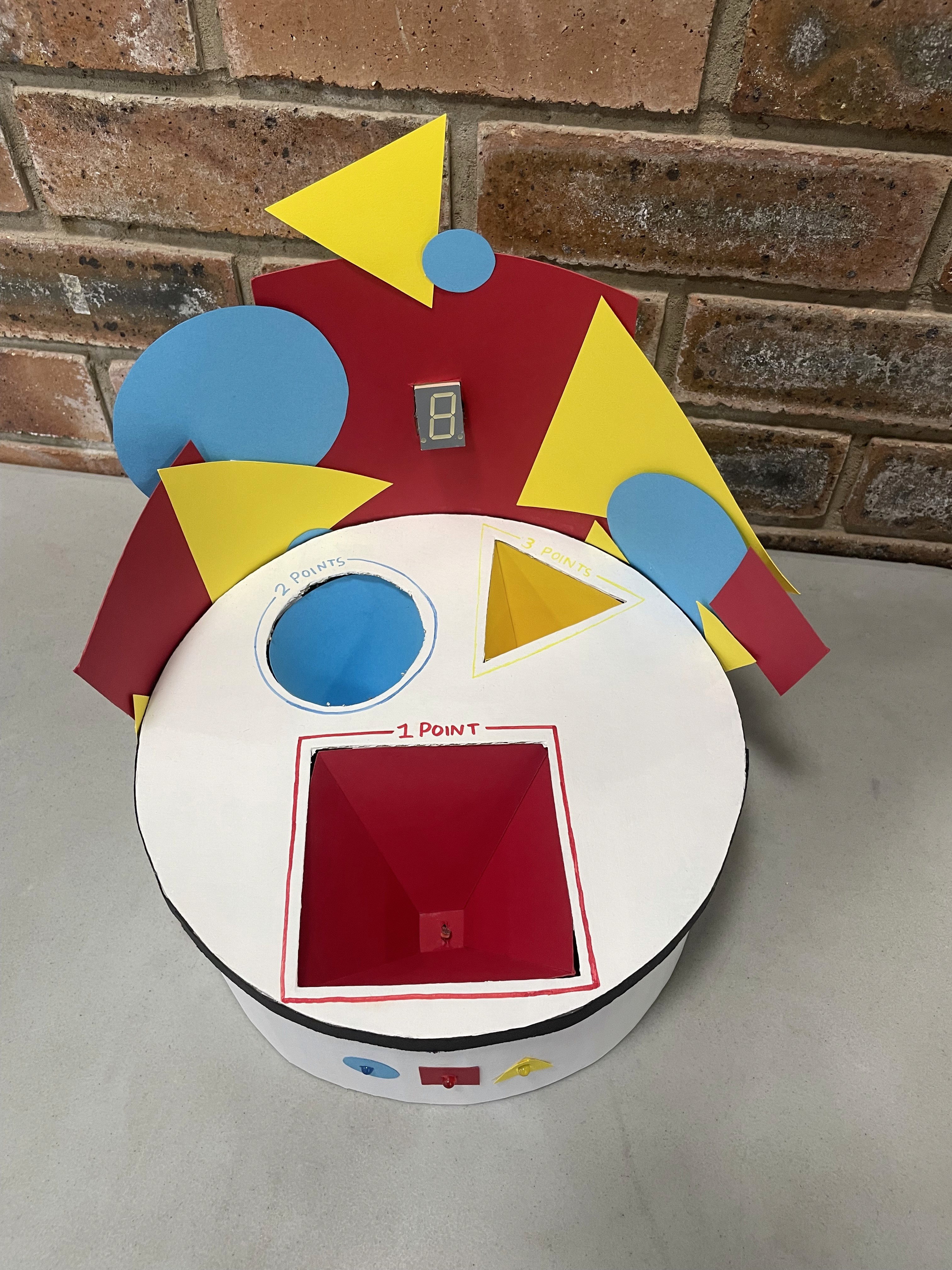
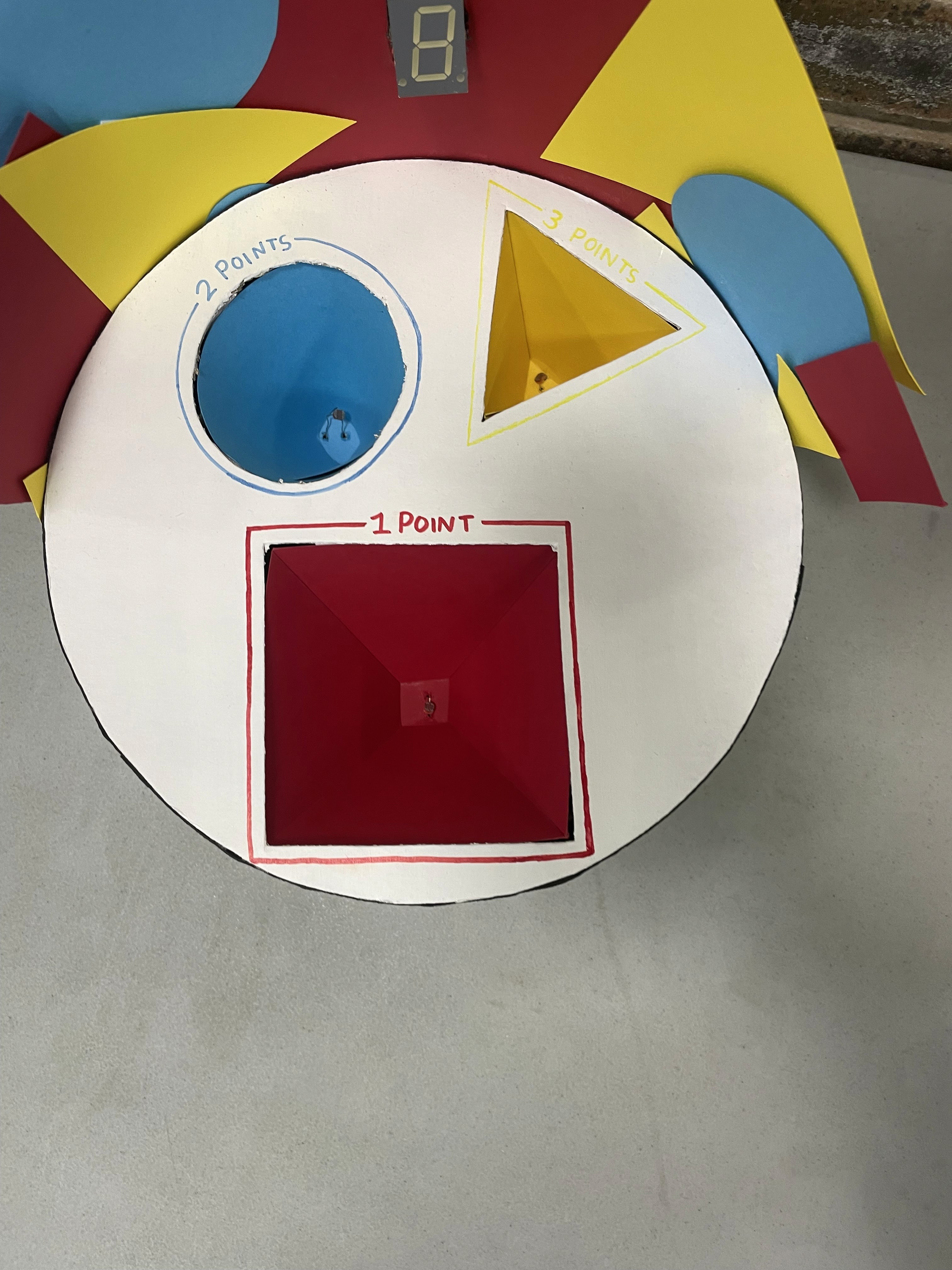
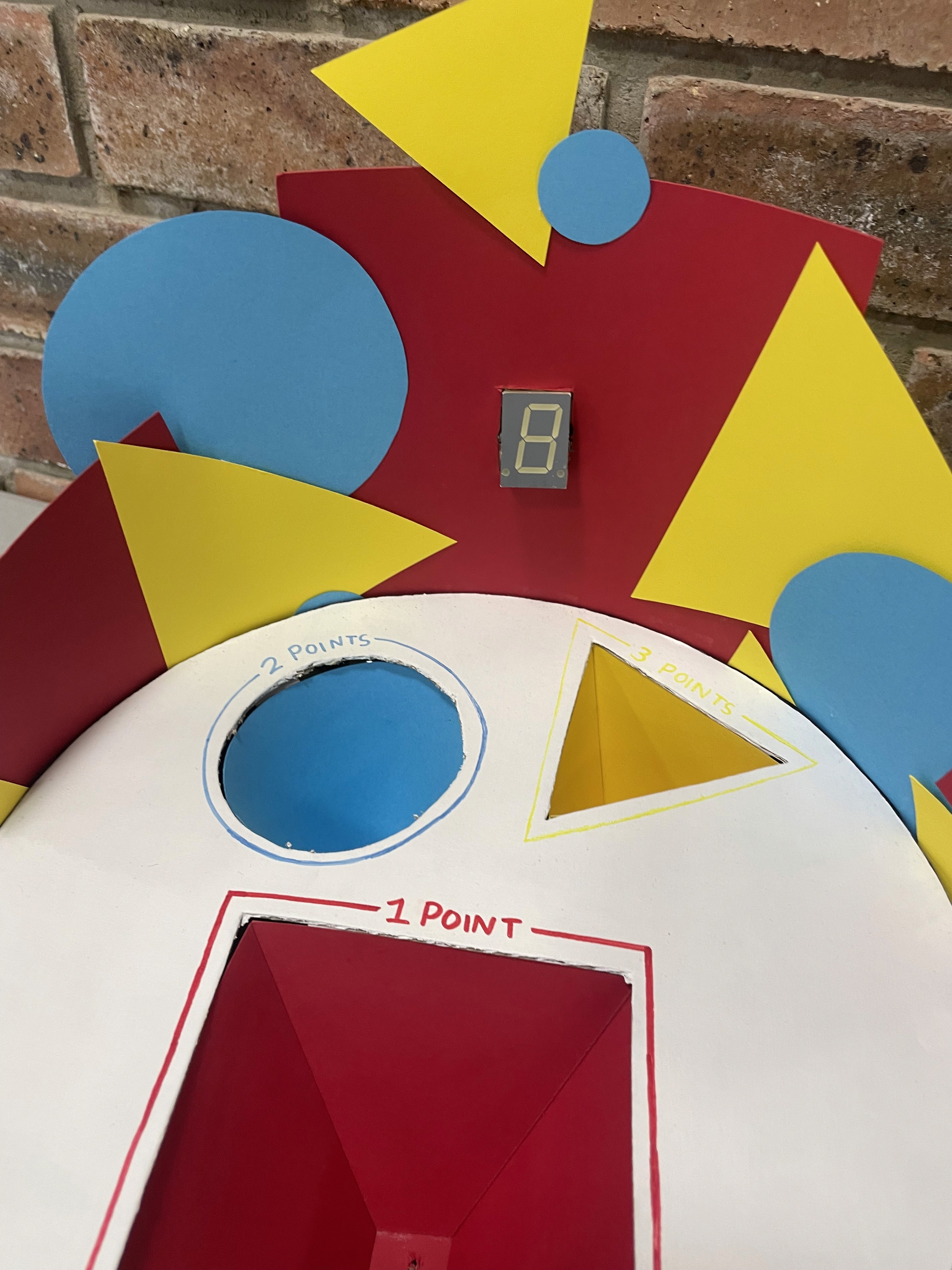
This project is an interactive children's game designed to make physical play engaging and rewarding through the use of sensor-triggered lights and sounds. Players throw a ball into one of several target holes, each equipped with a light-dependent resistor (LDR). When a ball lands in a hole, the system responds with visual and audio cues and awards points, turning a simple toss into a fun and feedback-rich experience.
This project was developed as part of a broader investigation into interactive systems that promote physical engagement through simple electronic feedback. It focuses on combining accessible hardware with playful design to create a rewarding experience for young users.
The development process started with prototyping light-dependent resistor (LDR) sensors, ensuring accurate detection when a ball entered each target hole. Using an Arduino microcontroller, the system was programmed to respond to sensor input by activating LED indicators and playing a sound, providing immediate feedback and a basic scoring mechanism. Each hole could be assigned a unique point value to introduce variation and challenge.
Throughout the project, key areas of focus included sensor calibration, real-time input detection, and designing intuitive feedback using both visual and audio outputs. The hardware was kept modular to allow future expansion or integration with digital displays.
This project contributed to a better understanding of input/output systems, basic game mechanics, and the use of physical computing to support interactive learning and play.